ATTICA THEN AND NOW
“We have set forth demands that will bring closer to reality the demise of these prisons, institutions that serve no useful purpose to the People of America but to those who would enslave and exploit the People of America.”
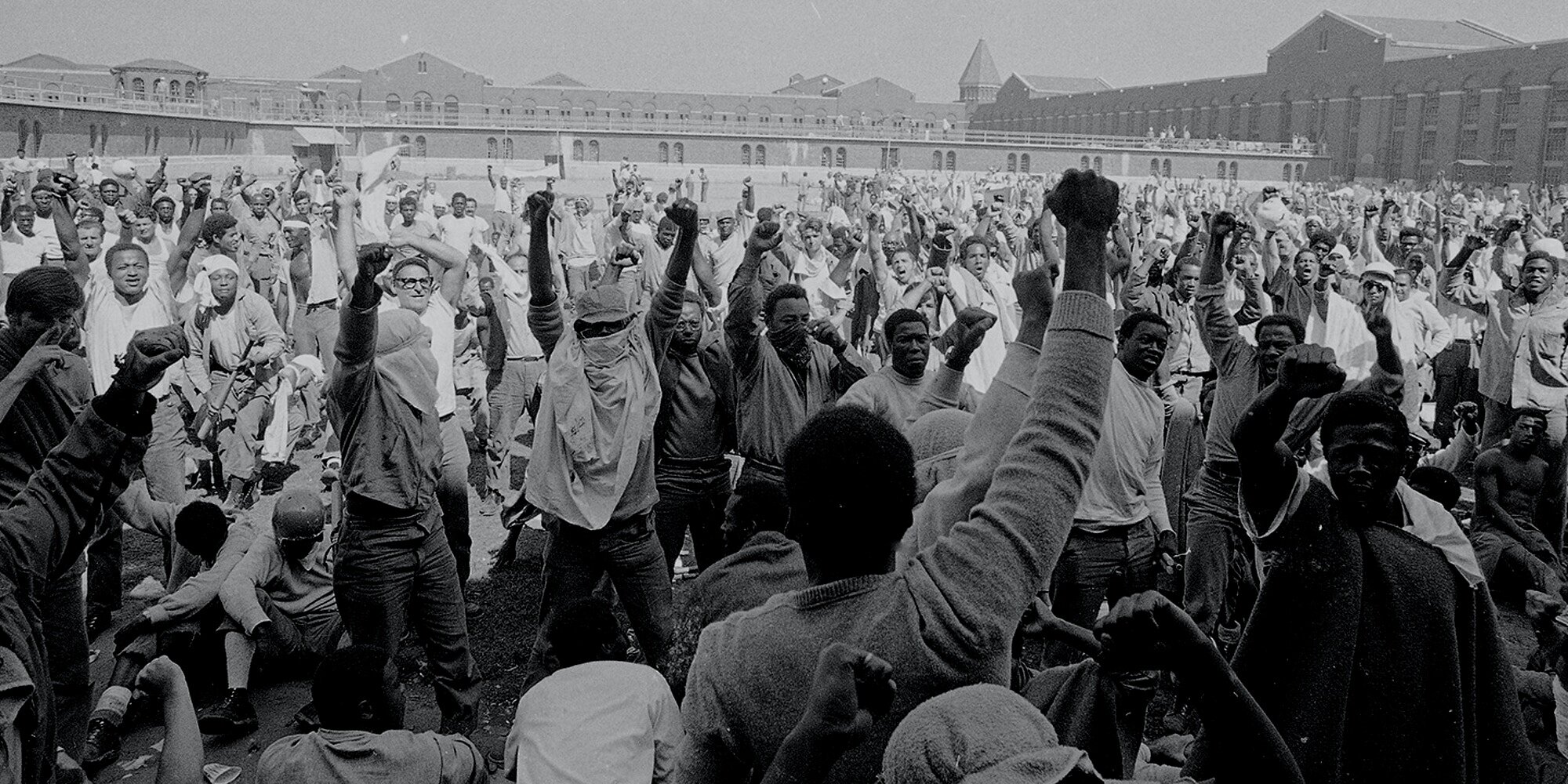
In September of 1971, an uprising by the incarcerated men of Attica, a maximum security prison located in western New York, ended in the bloodiest attack by state authorities in United States history.
On September 9th, thirteen hundred incarcerated men had rebelled due to inhumane prison conditions, taking over the prison, and holding forty guards hostage. After issuing a list of demands—including calls for improvements in living conditions and medical care, religious freedom, and educational and training opportunities—they entered into negotiations with state officials. The State unilaterally ended the negotiations and Governor Rockefeller ordered an armed attack against the defenseless men. In the course of the brutal highly militarized take over, State police and guards slaughtered thirty-nine individuals, including ten hostages, but it was deliberately and falsely reported by the State that the hostages had their throats slashed by the men who had rebelled. After the massacre there was systematic brutality, torture of the men, selective punishment and isolation of alleged rebellion leaders.
The Attica rebellion played a foundational role in the development of today’s anti-prison movements. The uprising may have brought awareness to prison conditions, but how far have we really come in five decades? The prison population has grown from about 300,000 in 1970 to more than 2.4 million today. Over five decades later, we look back at the uprising, and how we continue to fight to make the vision of the Attica Brothers a reality.